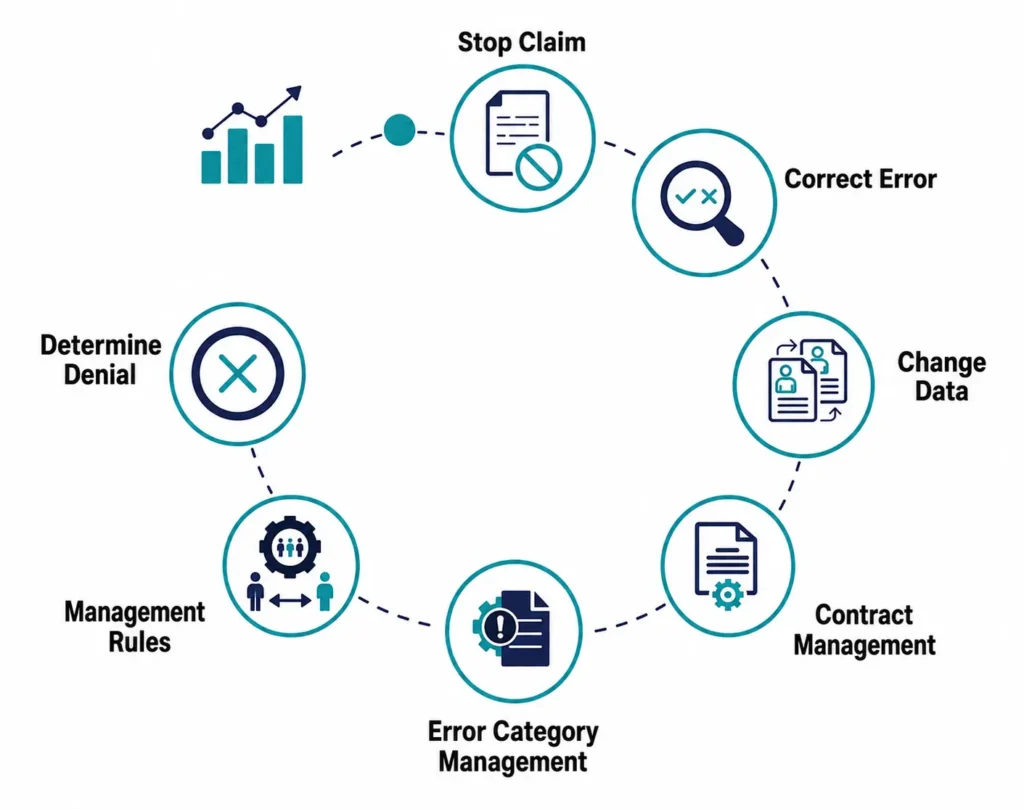




Denial Management Services

Denial Management Solutions That Stop Claim Denials at the Root

Our denial management solutions combine CARC and RARC root-cause analysis, pre-submission auditing, and eligibility verification checks to catch the errors — eligibility gaps, coding mismatches, missing prior authorizations — before a claim is ever denied.

Built on HIPAA and CMS Compliance, Not Just Speed

Denial management touches protected health information at every stage—claim data, clinical documentation, appeal submissions—which makes HIPAA compliance a baseline requirement, not an add-on. Our processes are built around secure data handling, access controls, and audit trails for every claim touched. We also track CMS denial management guidance and payer-specific rules as they’re updated, since a coding or documentation standard that was compliant last year can generate new denials this year if it isn’t kept current.

Why Denial Prevention Beats Denial Recovery

Between 86% and 90% of claim denials are preventable, according to Kaiser Family Foundation research—and once a denial happens, nearly half of even the “avoidable” ones are never successfully recovered, per the Change Healthcare Denials Index. That gap is the entire argument for prevention over cure: catching an eligibility issue, a coding mismatch, or a missing authorization before submission protects revenue that a same-day appeal often can’t recover after the fact.

Best Denial Management Practices We Follow:

Denial Management Built for Every Type of Organization

Hospitals & Health Systems

Health systems manage denial volume across multiple departments and payer contracts at the same time. We help identify systemic patterns before they compound organization-wide.

Group & Multi-Specialty Practices

Denial patterns often vary by provider and by location in larger groups. We standardize denial tracking and appeals consistently across every provider.

Independent Physician Practices

A denied claim carries more weight for a smaller practice. We manage the full denial workflow, so an independent practice doesn’t need dedicated denial-management staff in-house.


RCM Companies & Billing Partners

Some billing and RCM companies bring us in specifically for denial management, using our team as a specialized layer within their own client-facing service rather than building that expertise internally.


How Our Denial Management Process Works

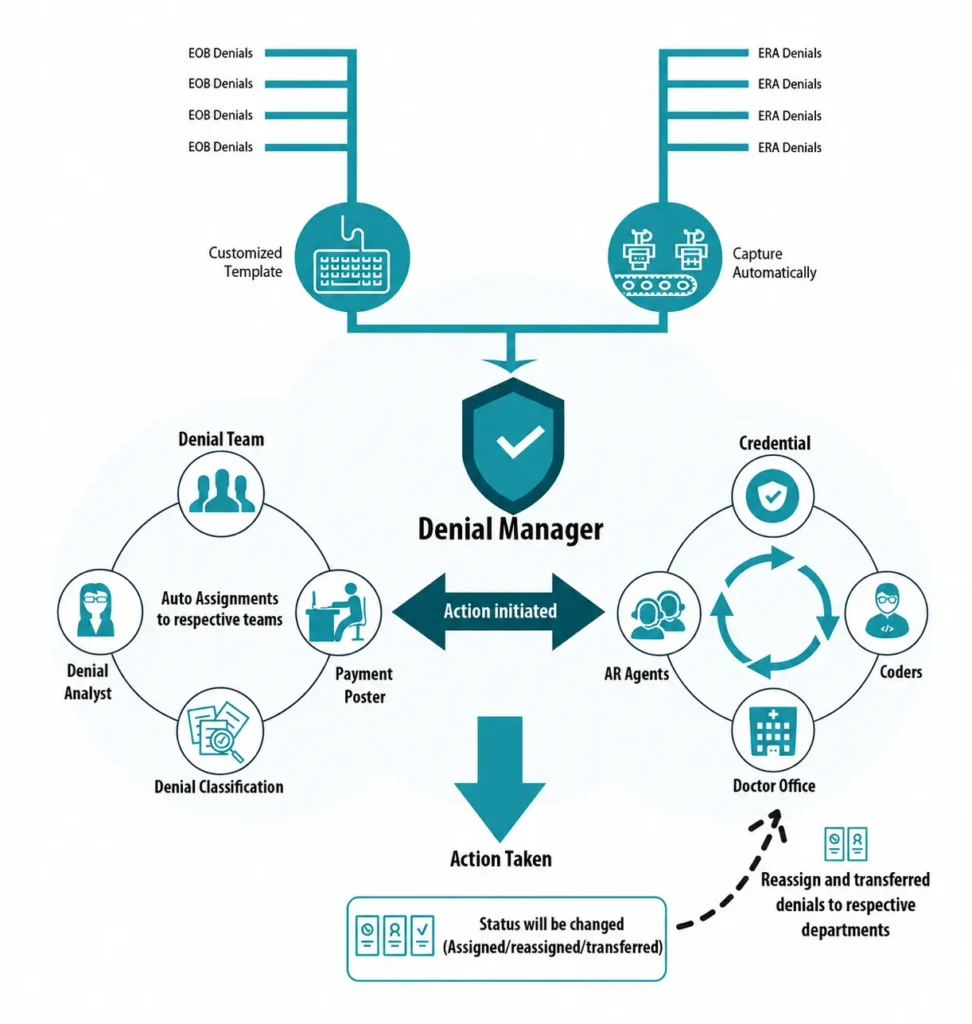
Every denied claim gets complete visibility from first submission through final resolution, tracked in one place—no jumping between your practice management system, your EHR, and a separate tool to piece together what happened.

Claims are categorized and prioritized by dollar value and denial type, then routed to the right resolution path immediately, backed by denial management templates that sort and prioritize by urgency.

What Effective Denial Management Actually Achieves

The Key Elements We Focus On

The best denial management services we provide for our clients include our loyalty and dedication towards their project. 

Identify

We flag the specific claims, patterns, and process gaps most likely to trigger a denial — before it happens.


Manage

Every denial gets categorized by reason, cause, source, and payer, so nothing gets treated as a one-off.

Monitor

Root causes get tracked over time, so a denial pattern gets fixed at its source instead of resurfacing every month.


Prevent

Preventive measures and structured appeal strategies get built directly into your billing workflow, not bolted on after the fact.


What Sets Our Denial Management Apart

Every denial is routed to a dedicated denial-analysis process, separated into line-item and full-claim denials

Deep working knowledge of federal and commercial payer-specific rules and payment mechanisms

Real-time reporting that shows denial trends as they develop, not after a quarter has already passed

Automated workflows that cut cycle time on repetitive resubmission tasks, recovering revenue faster

Claims organized into structured follow-up groupings by urgency and value

Ongoing analysis that identifies, isolates, and quantifies where revenue leakage is actually coming from

Understanding CARC and RARC Denial Codes

Every denial comes back from a payer with a CARC (Claim Adjustment Reason Code) explaining what happened, often alongside an RARC (Remittance Advice Remark Code) providing additional detail. Reading these codes correctly—and tracking which ones recur most often—is what separates targeted denial prevention from generic resubmission. A small handful of CARC categories account for the large majority of denials industry-wide, meaning a focused fix on the top few root causes moves your denial rate more than treating every denial as its own isolated problem. We categorize every denial by CARC/RARC code from day one, so patterns surface immediately instead of after months of accumulated claims.

How We Handle Every Denied Claim

Appeal Automation

Appeal documentation is pre-populated directly from denied claim data for the payer-specific forms that require it, cutting the manual work of rebuilding an appeal from scratch.

Audit Control

Every claim's full history — from first submission through final resolution — stays visible in one place, so nothing requires cross-referencing your practice management system and EHR separately to reconstruct what happened.

Testimonials

See What Our Happy Customers Say

“Their denial management team helped us identify the root causes of recurring claim denials and significantly improve our clean claim rate. Their follow-up process is professional, consistent, and results-driven.”

James Anderson

“We were struggling with delayed payments and unresolved denials. Their team streamlined the entire denial process, handled timely appeals, and helped us recover revenue that was previously being lost.”

Michael Roberts

“The level of expertise and attention to detail has been outstanding. From analyzing denial trends to submitting effective appeals, their service has made our revenue cycle much more efficient and manageable.” 1/2

3. Daniel Mitchell

Industry Awards:

FAQ

4–9% commonly as part of a broader RCM/billing percentage-of-collections fee, or as a standalone service billed per claim worked, or as a smaller percentage of recovered revenue. Cost depends on claim volume and how much of the appeals process is fully handled versus jointly reviewed.

Given that 86–90% of denials are preventable (KFF) and each reworked claim costs $25–$181 regardless of outcome, the real return comes from prevention, not faster appeals. Closing the process gaps that create denials in the first place recovers more revenue than optimizing how quickly you can appeal claims that shouldn’t have been denied at all.

Claim Adjustment Reason Codes (CARC) explain why a claim was denied or adjusted; Remittance Advice Remark Codes (RARC) provide additional context alongside a CARC. Categorizing denials by these codes is what makes root-cause analysis possible instead of treating every denial as a unique event.

And don’t worry, we will send you a reminder through email and admin notice banner of your WordPress dashboard.

A soft denial is temporary and can be corrected and resubmitted—a missing modifier or incomplete documentation, for example. A hard denial is final and unappealable, most often tied to a timely filing deadline or a service that was never covered. Preventing claims from becoming hard denials is where the real revenue protection happens.

Missing or incomplete prior authorization is one of the most common—and least appealable—denial categories, especially for imaging, procedures, and device-related claims. Once a claim is submitted without required authorization, there’s often no path to recover it after the fact, which makes front-end authorization tracking more valuable than back-end appeal work for this category specifically.

It has to be—denial management involves protected health information at every stage: claim data, documentation review, and appeal submissions. That means secure data transmission, limited access controls, and audit trails on who accessed what claim data and when.

It happens when a claim or appeal is submitted after a payer’s deadline—commonly 90 to 365 days depending on the payer—and it’s one of the least reversible denial types, since payers rarely make exceptions regardless of the underlying claim’s validity. Tracking filing deadlines proactively is the only reliable prevention.

Early data is promising but not universal. Among organizations already using AI in claims processing, recent industry survey data found a majority reported improved claims success rates. AI is currently strongest at predicting which claims are likely to be denied and flagging missing documentation before submission—a prevention tool, not a replacement for understanding why denials happen in the first place.

See how a denial management strategy built around root-cause prevention — not just faster appeals — can change your numbers.

Scroll to Top