
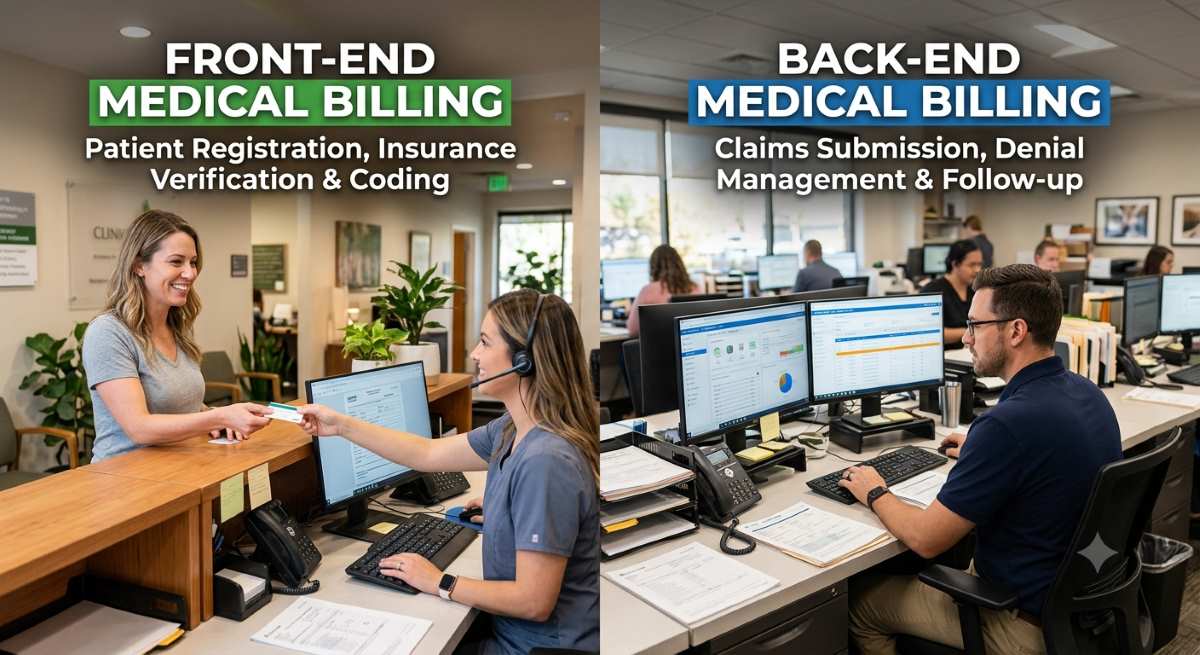
Medical billing isn’t just about sending claims to insurance companies. There’s a lot that happens before a claim is submitted and plenty that happens after. That’s why the billing process is divided into two parts: front-end medical billing and back-end medical billing.
Front-end billing makes sure everything is ready before your team sees your patients. The front-end billing team verifies insurance, confirms patient information, and checks for any required approvals.
The back end takes over after the visit. It includes coding, claim submission, payment tracking, and following up on denied or unpaid claims.
Here’s the thing. These two sides aren’t separate. They work together. A small mistake like the wrong insurance ID can lead to a denied claim weeks later.
That’s why both sides matter a lot. When your front-end and back-end teams work together, there are fewer billing issues, fewer delays, and a better chance of getting paid on time.
Looking for a better way to manage your billing from start to finish? Explore Accura Billing’s Revenue Cycle Management (RCM) services to see how we help practices improve cash flow and reduce claim delays.
In this guide, we’ll break down what front-end and back-end medical billing include, how they work together, and why both play a big role in your practice’s financial health.
What Is Front-End Medical Billing?
Front-end medical billing covers everything that happens before a claim is ever created. The goal is simple: make sure you have the right information before the patient is seen.
It all starts before a patient appointment. Patient details, insurance verification, and patient eligibility are checked before a patient is seen by a doctor.
This stage is very important because small mistakes in the beginning can cause big problems like denied claims later in the process. That’s why this routine paperwork matters a lot.
Only one small missing detail is enough to slow down everything. Then your team has to fix mistakes, resubmit claims, and spend a lot of time dealing with insurance companies.
Need help improving your billing workflow? Take a look at Accura Billing’s medical billing services to see how we help practices reduce errors, speed up reimbursements, and improve collections.
Why Front-End Billing Matters
Front-end billing is important because it sets the tone for the rest of the process.
Your team has a much better chance of submitting a clean claim if this step is right. Correct patient information, insurance verification, and correct documents are all parts of it. When these steps are rushed or skipped, a lot of problems can come up later that are not easy to fix.
A strong front-end process helps your practice:
- Reduce claim rejections
- Prevent avoidable denials
- Improve billing accuracy
- Get paid faster
- Get a nicer check-in experience
In a nutshell, the better your front-end is, the easier you will have it later in the process because you will avoid a lot of problems that can take the form of denials.
Goals of Front-End Billing
Every front-end task has the same purpose: helping your practice submit clean, accurate claims the first time.
Accurate Patient Information
Everything starts with accurate patient details. The smallest details like names, dates of birth, addresses, and insurance IDs are very important to be correct. Even a small typo can hold up a claim.
Insurance Validation
Insurance validation shouldn’t just be for new patients. Every time a patient revisits, he should be verified the first thing. This is a small step, but it helps confirm active coverage and identifies co-pays and deductibles. It also catches services that need prior authorization before treatment.
Clean Claims
Clean claims start with good front-end billing. When everything is entered correctly, claims are more likely to be accepted on the first submission.
Fewer Denials
Many claim denials don’t happen because of coding mistakes. They start much earlier with missing information, expired insurance, or incomplete documentation. Catching these issues before the visit can save your practice time and revenue.
If your practice is seeing frequent denials, Accura Billing’s medical coding services can help improve claim accuracy and reduce costly billing errors before claims are submitted.
Main Responsibilities of Front-End Medical Billing
Front-end billing includes several day-to-day tasks that help prevent problems before they happen. While each one seems simple on its own, together they create the foundation for faster payments and fewer denied claims.
Patient Registration
The first step of the billing process is patient registration. Basic details like a patient’s name, date of birth, contact information, and important details are collected.
This step is simple and basic, but the accuracy of details matters way more than people realise. Sometimes, even a detail like a misspelled name can cause big issues that can lead to claim denial.
Insurance Eligibility Verification
It’s very important to check if the patient is eligible for insurance verification before the patient is seen by a doctor.
Eligibility verification checks if the patient’s insurance is active and what it covers. It also shows if authorization is needed and what the patient may owe.
Instead of finding out there’s a problem after the claim is submitted, you can catch it before the appointment.
Want to make this process easier? Accura Billing’s insurance verification services help practices confirm patient coverage before claims are ever submitted.
Prior Authorization
Not all services can be performed right away. Some need approval from the insurance company first.
Without the proper approval, the claim can be denied even if the service was medically needed and necessary.
This is why it’s very important to check authorization beforehand.
Referral Verification
Some specialist visits require a referral from the patient’s insurance plan. Making sure it’s in place before the appointment can help avoid denied claims later.
Up-to-Date Patient Information
Make sure the patient information is always kept updated in records. Any change in name, verification ID or even a misspelled word matters a lot. These small issues can delay claims and cause billing issues.
Collecting Co-pays and Deductibles
Collecting patient payments at check-in is much easier than trying to collect them later. It also helps patients know what they owe before their visit.
Scheduling and Appointment Verification
Booking an appointment is only a small part of scheduling. It also helps your team stay ahead of potential billing problems.
Getting everything in place before the appointment helps prevent delays and keeps track of claims.
Obtaining Required Documentation
Not every claim can be submitted right away. Some services need a lot of extra documents first. These documents can be referrals, authorizations, IDs, or medical records.
You have to make sure everything is ready before the visit to help keep things moving and avoid issues.
It also makes the experience smoother for patients and helps your billing team avoid delays.
What Is Back-End Medical Billing?
Once the patient visit is over, the back-end billing process begins.
This is where the financial side of the visit is handled. The information collected by your front office is reviewed, medical services are coded, claims are prepared and submitted to insurance companies, payments are posted, and any unpaid claims are followed up.
In other words, the back-end team works to make sure your practice actually gets paid for the care it provides.
When everything is right, claims are processed much faster, and your payments come on time. But if your claims have coding errors or missing information, the entire process becomes complicated. Claims are delayed or even denied, wasting a lot of your time. That’s why back-end billing is just as important as everything that happens before the patient is seen.
If you want to reduce denials and improve collections, explore Accura Billing’s medical billing services to see how we help practices manage every step of the billing process.
Why Back-End Billing Matters
Submitting your claim isn’t the end of the process because sometimes, it’s just the start.
Claims don’t always go through the first time. Insurance companies may deny them, request more information, or pay less than they should. Your team then has to sort everything out and follow up.
A strong back-end billing process helps your practice:
- Get paid faster
- Reduce claim denials
- Improve cash flow
- Keep accounts receivable under control
- Spend less time chasing unpaid claims
The faster billing issues are identified and resolved, the sooner your practice receives payment.
Objectives of Back-End Billing
The goal of back-end billing isn’t just to submit claims. It’s to make sure every claim has the best chance of being paid correctly and on time.
Faster Reimbursement
Getting the claim right the first time and replying to payer requests promptly can help avoid unnecessary delays. That often means getting paid faster.
Reduced Denials
Some claim denials are unavoidable. But many can be prevented by reviewing claims carefully and addressing issues as soon as they come up.
Improved Cash Flow
Steady cash flow depends on getting claims paid without unnecessary delays. Strong back-end billing helps keep money coming into your practice consistently instead of leaving claims sitting unpaid for weeks or months.
If unpaid claims are slowing down your revenue, Accura Billing’s accounts receivable (AR) management services can help recover outstanding balances and improve collections.
Key Responsibilities of Back-End Medical Billing
Back-end billing includes everything that happens after a patient receives care. Each task plays a role in moving a claim from submission to payment.
Medical Coding Review
Before a claim is submitted, the medical codes should be reviewed for accuracy.
The services documented by the provider must match the correct diagnosis and procedure codes. Even small coding mistakes can lead to claim denials or reduced reimbursement.
If coding accuracy is a challenge, Accura Billing’s medical coding services help practices submit cleaner claims and reduce preventable billing errors.
Charge Entry
The next step is entering the charges into the billing system. Doing this carefully makes sure every billable service is included before the claim goes out. Missing or incorrect charges can result in lost revenue or payment delays.
Claim Scrubbing
Before a claim is sent to the insurance company, it’s checked one last time through a process called claim scrubbing.
This step looks for missing information, coding mistakes, formatting issues, and payer-specific requirements. Catching these problems early helps reduce rejections and saves time.
Claim Submission
After the claim passes review, it’s submitted to the insurance company for processing.
Submitting clean, accurate claims the first time gives your practice the best chance of receiving payment without unnecessary delays.
Payment Posting
When insurance payments are received, they’re recorded in the billing system.
Payment posting helps your practice track what has been paid, what is still outstanding, and whether the insurance company paid the expected amount.
Insurance Follow-Up
Some claims go through without any issues. Others take some time, and sometimes they need additional information.
If a claim gets delayed, the billing team reaches out to the insurance company. They figure out what’s holding it up and then fix the issue.
Denial Management
When a claim is denied, the first thing you have to do is find out the reason why.
Once you find the issue, only then can you fix it.
Appeals Management
Sometimes correcting a claim isn’t enough. A formal appeal may be needed instead.
Most appeals include updated documents or corrected details. The sooner you send the appeal, the better your chances of getting the claim approved.
AR Follow-Up
Some claims remain unpaid even after they’ve been processed.
AR follow-up focuses on these outstanding balances. The billing team contacts insurance companies or patients when payments are still outstanding.
Following up regularly helps collect unpaid claims before they pile up.
Patient Billing
Even after insurance pays its part, the patient may still have a balance.
The billing team sends statements, answers questions, processes payments, and explains what the patient owes.
Clear communication helps patients understand their bills and makes payments easier to collect.
Front-End vs. Back-End Medical Billing
Front-end and back-end billing are both very different, but they work together to help you get paid.
The front end focuses on preventing billing problems before they happen. The back end takes over once care has been provided and ensures claims are processed, payments are received, and any issues are resolved.
| Front-End Medical Billing | Back-End Medical Billing |
|---|---|
| Takes place before a claim is created | Begins after the patient receives care |
| Collects patient and insurance information | Reviews, submits, and follows up on claims |
| Verifies insurance eligibility | Posts insurance payments |
| Gets referrals and approvals | Manages denials and appeals |
| Updates patient information | Follows up on unpaid claims |
| Helps prevent billing errors | Helps recover delayed or denied payments |
How Front-End Billing Affects Back-End Success
Front-end and back-end billing are distinct but inseparable. They affect each other a lot because even the smallest mistake in front-end billing causes huge problems later in the process.
A small mistake is enough to delay your payment. Your billing team has to spend a lot of time first finding the problem and then fixing it. Then they have to send the claim back to the insurance company and hope for the best.
The same thing can happen if:
- Insurance isn’t verified before the visit.
- A prior authorization is missing.
- A referral isn’t on file.
- Patient information is outdated.
- Required documents weren’t collected.
This is why front-end billing matters. When patient information and insurance details are correct from the start, there are fewer issues to fix later.
Accura Billing’s RCM services help practices handle billing challenges, reduce errors, and keep payments moving.
Back-End Billing Mistakes That are easy to make
Getting the front end right is important, but the back end matters too if you want to get paid on time. Problems like coding mistakes, missed deadlines, or slow follow-ups can hold up payments.
Here are some mistakes that can affect the back-end billing process.
Incorrect Patient Information
These mistakes may seem like a big deal. But even a typo in your name or a wrong date is enough to get a denied claim.
That’s why taking some minutes to recheck these mistakes saves you from wasting a lot of hours later.
Expired Insurance
Insurance plans change all the time. If coverage isn’t verified before the appointment, your team could end up submitting a claim to an inactive policy.
That usually means delayed payments and extra follow-up.
Missing Prior Authorization
Some procedures need approval from the insurance company before they’re performed.
If that approval isn’t in place, there’s a good chance the claim will be denied—even if the treatment was medically necessary.
Eligibility Not Verified
Skipping an eligibility check can create problems for both your practice and your patients.
You might not find out the patient’s coverage has changed until after the claim has already been submitted.
Missing Documentation
A claim can get delayed when something important is missing.
Without the required documents, the insurance company may not process the claim.
Incorrect Referral
Some specialists require a referral from the patient’s health plan.
A missing or incorrect referral can cause the insurance company to reject the claim.
The good news? Most of these mistakes are easy to prevent. A few extra checks before the patient is seen can save your billing team a lot of time—and help your practice get paid much faster.
Back-End Billing Mistakes to Avoid
With front-end billing, it’s also very important for the back-end billing to be correct. Otherwise, your payments can slow down.
Here are some common back-end billing mistakes.
Incorrect Coding
Coding mistakes can slow down the billing process. A wrong code can lead to claim denials and payment delays. This is why accurate coding is important because it makes it easier to process claims without issues.
Accura Billing can help practices improve coding accuracy and reduce claim problems.
Duplicate Claims
Submitting the same claim twice can create unnecessary confusion.
Sending the same claim more than once can create problems. The claim may be rejected or delayed, which means more follow-up work for your team.
Missing Modifiers
Some services need modifiers when a claim is submitted. Missing or incorrect modifiers can cause payment delays or claim denials.
Late Claim Filing
Insurance companies have different deadlines for claim submission. If a claim is sent late, it may be denied. Staying organized helps prevent these avoidable issues.
Poor AR Follow-Up
Claims are not always paid right away after submission.
Some stay pending or need follow-up before payment is released. Without regular checks, unpaid claims can sit for months.
Delayed Payment Posting
Posting payments as soon as they come in helps keep your accounts accurate and up to date.
When payment posting is delayed, it becomes harder to track unpaid balances and claims that need attention.
Simple steps like checking claims, following up, and using correct codes can help avoid many billing problems.
Tips for Better Front-End and Back-End Billing
A good billing process is not about doing more work. It’s about catching problems early and keeping claims on track.
Here are some simple things that can help
Keep Staff Updated
Insurance rules, coding updates, and payer requirements change all the time.
Regular training helps your front office and billing team stay current, reduce errors, and handle claims more confidently.
Verify Insurance Before Every Visit
Don’t assume a patient’s insurance is the same as their last visit.
A quick eligibility check before each appointment can help catch coverage changes before they turn into denied claims.
Use Medical Billing Software
You don’t have to do every task manually. Use good billing software to handle repetitive tasks and track your claims easily.
Make Eligibility Checks Easier
Many billing systems can verify insurance electronically before the patient arrives.
Automating this step saves time and helps your staff spot issues early.
Perform Claim Scrubbing
Always check claims before submission.
This helps catch errors, missing information, and payer requirements that could lead to rejected claims.
Check KPIs
Tracking your billing performance helps you find and fix problems early.
Some of the most useful key performance indicators (KPIs) include:
- Claim denial rate
- Clean claim rate
- Days in accounts receivable (AR)
- First-pass claim acceptance rate
- Average reimbursement time
Tracking these numbers regularly gives you a better picture of how your billing process is performing.
Check for Billing Errors
Regular checks help find mistakes and improve your billing process.
They can catch problems before they affect payments.
Improve Team Communication
Your front office and billing team need to work together. Good communication is very important because it helps catch problems early. It also helps you to avoid problems later.
Outsourcing Front-End and Back-End Billing
Handling billing in-house can become a lot to manage. There are claims to submit, insurance rules to follow, payments to track, and problems to fix when things don’t go as planned.
For many practices, billing gets added on top of an already busy day. Your team is taking care of patients, scheduling visits, answering calls, and handling paperwork. Keeping up with every part of billing can be difficult.
Outsourcing can take some of that work off your plate. A billing team can help with:
- Checking patient insurance details
- Submitting claims correctly
- Fixing denied claims
- Following up on unpaid payments
- Keeping track of billing issues
When your staff doesn’t have to constantly worry about billing falling behind, they can focus on patients and do their work in a much better way.
At Accura Billing, we help take billing work off your team’s plate.
We can support you with specific billing tasks or handle the entire process from start to finish.
FAQs
What is front-end medical billing?
Front-end billing involves all the work done before a claim is sent. Things like checking insurance and patient details are part of it.
What is back-end medical billing?
This happens after the visit and handles claims, payments, and follow-ups.
Can one work without the other?
Not really. Both parts work together to help keep claims accurate and payments moving.
Can front-end billing issues lead to denied claims?
Yes. Simple errors before claim submission can cause delays or denials.
Is medical coding part of back-end billing?
Yes. Coding happens after the visit and helps prepare the claim for submission.
Conclusion
Front-end and back-end medical billing work together to keep the billing process moving.
The front-end team helps make sure claims start correctly. The back-end team follows those claims and handles payments.
A strong billing process helps your practice:
- Reduce errors
- Prevent denials
- Get paid on time
- Spend less time on billing issues
Accura Billing can help with the work behind the scenes, from preparing claims to following up on payments.